
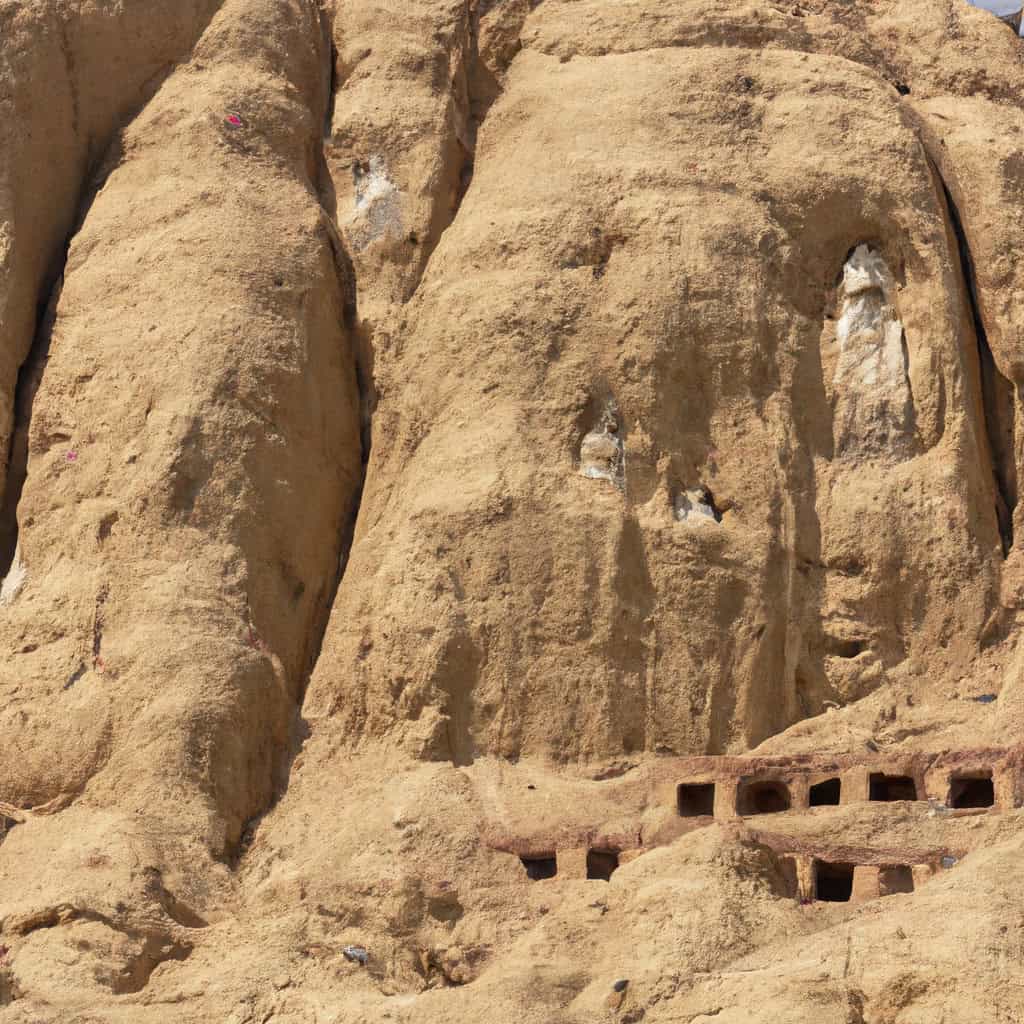
Buddhas of Bamiyan in Bamiyan, is one of the many fascinating sites that both foreign visitors and local tourists can explore while they visit Afghanistan and exploring Bamiyan Province. The site, located in the heart of central Afghanistan, holds a deep sense of intrigue. Filled with scenic beauty and historical importance, Buddhas of Bamiyan is a spectacle that is bound to leave you awestruck. Carved into the mountainside in the 6th century, these monumental statues of seated Buddha carved into the side of a cliff were once a testament to the region’s rich cultural and religious history. These Buddhas’ spiritual impact, historical significance, and architectural marvel beckon visitors from across the globe.
Buddhas of Bamiyan Most Important Events
- The Carving of the Buddhas: This event marked the most impactful historical moment at Buddhas of Bamiyan. Carved in the 6th century, these colossal statues represented the Gandhara style of art and bore witness to the region’s flourishing Buddhist culture.
- The Destruction of the Buddhas: This was another major event that shaped its history. In 2001, these priceless relics of history were destroyed by radical extremists, causing an international outcry and marking a significant loss for Afghanistan and the world’s cultural heritage.
- The UNESCO Preservation Efforts: This event provides a significant development that adds to its legacy. UNESCO, joined by several countries, have launched efforts for preserving this historical site and exploring possibilities for reconstructions of these lost treasures.
History of Buddhas of Bamiyan in Bamiyan
Bamiyan, an ancient town on the Silk Route, was a thriving Buddhist center from the 2nd century up to the Islamic invasion in the 9th century. The town’s significance is marked by the two monumental Buddha statues, once standing 35 and 53 meters tall. These grand structures, carved directly into the sandstone cliffs, were a sight to behold before their destruction in 2001.
Despite the odds, Bamiyan remains a highly significant historical site. The area around the Buddhas is peppered with over a thousand caves, evidence of a bustling monastic community. Paintings on the cave walls date from the 5th to 9th centuries and are a testament to a time when Bamiyan was a vibrant center of spirituality and learning.
The cave complex, the city, and indeed the entire province of Bamiyan, wear their history with a sense of quiet dignity. Archaeologists continue to find remnants of what was once a thriving hub of trade, art, and Buddhist teaching. This enduring legacy speaks volumes about Bamiyan’s importance in historical, cultural, and religious contexts.
Why It’s Important to Afghan History
The Buddhas of Bamiyan are more than just monumental artifacts; they represent a significant chapter in Afghan history. They serve as historical symbols underscoring Afghanistan’s diversity, cultural richness, and influence of Buddhism before the advent of Islam.
Furthermore, the sandstone cliffs’ statues stood as silent spectators to the region’s changing fortunes, testifying to the Buddhist civilization that once flourished here before Islamic influence prevailed. The Buddhas of Bamiyan are woven into Afghanistan’s cultural fabric and continue to resonate in the Afghan identity today, representing endurance, resilience, and a hope that transcends time.
Why to Visit Buddhas of Bamiyan
Buddhas of Bamiyan is a site of spectacular beauty and tranquility. From the awe-inspiring remains of the majestic Buddhas to the backdrop of the rugged cliffs, the scenic beauty of this place is enough to take your breath away. Experiencing the stunning sunsets against the cliffs as the day descends, and, if you’re lucky, perhaps even catching a glimpse of the elusive snow leopard, leaves you with a sense of wonderment and peace.
Top highlights of Bamiyan include:
- The impressive natural amphitheater formed by cliffs
- Exploring ancient Buddhist cave monasteries
- Enjoying the vast vista of Bamiyan Valley
- Hiking to the cliff’s top for a panoramic view
- Visiting the local bazaars to buy traditional Afghan hand-woven carpets
The best way to reach Buddhas of Bamiyan is to fly into Kabul and then catch another flight or drive to Bamiyan. Early summer and autumn are the best times to visit, with pleasant weather and clear skies offering breathtaking views.
Cultural & Tourist Significance
Visiting the Buddhas of Bamiyan is an immersion into the rich tapestry of Afghanistan’s past. From learning about the history of ancient trade routes to witnessing the narrative of religious change, the site plays a vital part in understanding the evolution of Afghan culture.
Despite the destruction of two major Buddhas, the vast network of caves, frescoes, and the UNESCO World Heritage site’s landscape continue to draw tourists. Bamiyan’s recognition as a cultural capital manifests in its diverse festivals, such as the Silk Route Festival, which showcases the region’s music, dances, and handicrafts.
Finally, Bamiyan is budding as an adventure tourism spot. From skiing on the snowy slopes of Koh-e-Baba to trekking up the highlands, Bamiyan offers unique experiences for adventure enthusiasts.
Interesting Facts
In addition to their historic grandeur, the Buddhas of Bamiyan, or what remains of them, have some intriguing tales associated with them. A legend tells of a prophecy wherein the two Buddhas shall rise again in more peaceful times, a beacon of hope for a serene future.
Interestingly, though the statues themselves were destroyed, many of the cave frescoes have survived. They give us valuable insights into the Buddhism practiced here, its fusion with local Zoroastrian and Hindu influences. The frescoes are an amalgamation of different artistic styles from the region, including Greek, Persian, and Indian.
Lastly, recent archaeological efforts revealed the existence of a third, previously unknown, reclining Buddha at the site. Its location is still a secret, and excavations are ongoing, adding yet another layer of intrigue to the Buddhas of Bamiyan.